ETP vs OFE Copper – What Makes Oxygen-Free the Upgrade
As electrification, renewable energy, and digital technologies accelerate, the need for high-performance copper conductors is stronger than ever.
The Shift Toward Purity and Performance
As electrification, renewable energy, and digital technologies accelerate, the need for high-performance copper conductors is stronger than ever. Industries such as electric mobility, green energy, power electronics, and data transmission depend on materials that combine exceptional electrical conductivity, ductility, and durability.
For decades, ETP (Electrolytic Tough Pitch) copper rod has been the most widely produced and used grade of copper. However, in high-precision and demanding applications, oxygen-free copper rod (OFE/OFHC) is increasingly preferred for its superior purity and performance. Understanding the distinctions between these two grades helps manufacturers and end-users make informed choices for efficiency, reliability, and long-term value.
Chemical and Microstructural Differences
The most fundamental difference between ETP and oxygen-free rod lies in their oxygen content, which shapes both their microstructure and performance.
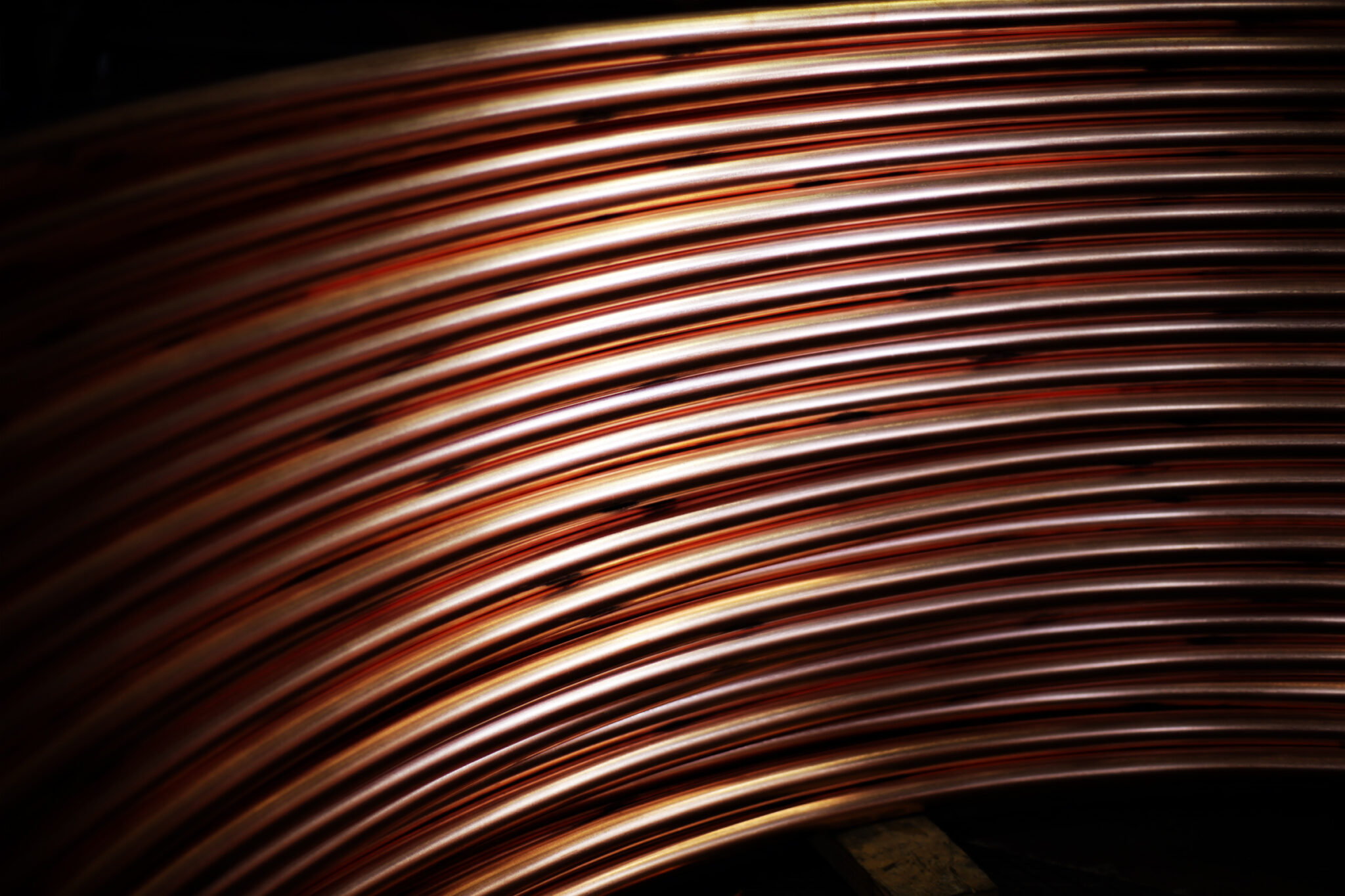
ETP rod (C11000) contains about 200 parts per million of oxygen, forming Cu₂O inclusions located along grain boundaries, acting as obstacles to electron movement and dislocation flow.
Oxygen-free copper grades differ greatly in oxygen content. C10200 contains less than 10 ppm of oxygen, while C10100 contains less than 5 ppm of oxygen. These extremely low oxygen levels produce a clean, uninterrupted crystal structure.
Electrical Conductivity
Copper’s remarkable electrical conductivity stems from its crystal structure and electronic configuration. However, impurities and grain boundary features play a major role in determining final conductivity.
ETP copper typically reaches 100–101.5% IACS, with minor electron scattering occurring at oxide inclusions. Oxygen-free copper achieves 101–102% IACS, effectively reaching closer to the metal’s theoretical limit.
While the difference may seem marginal, it becomes critical in low-loss and high-frequency applications such as precision coils, vacuum electronics, and high frequency signal transmission. In these systems, every fraction of a percent in conductivity translates into measurable performance gains.
Ductility and Mechanical Behavior
The ability of a copper rod to deform without fracturing depends on how freely dislocations can move within its face-centered cubic (FCC) structure.
ETP copper displays good ductility but suffers from localized hard points where Cu₂O inclusions block dislocation flow. In contrast, oxygen-free copper’s cleaner structure allows smoother plastic deformation and higher elongation before fracture.
This difference is especially important in wire drawing, rolling, and continuous extrusion, where consistent metal flow and dimensional precision are essential for product quality and process efficiency.
Annealing and Recrystallization
Annealing behavior in copper depends on the number of nucleation sites available for recrystallization.
ETP copper, with many oxide-related nucleation sites, begins to recrystallize gradually at lower temperatures. Oxygen-free copper, having fewer such sites, requires slightly higher activation energy and recrystallizes rapidly once the process starts.
This distinct annealing response means that oxygen-free copper rod must undergo sufficient cold work—typically a reduction of at least 70 percent from an 8-millimeter diameter—to provide enough stored energy and dislocation density for effective grain refinement during final annealing. This consideration is especially important in the production of enameled magnet wire, where fine and uniform grain structure is essential for achieving optimal mechanical and electrical performance.
Resistance to Hydrogen Embrittlement
Another major advantage of oxygen-free copper is its complete immunity to hydrogen embrittlement.
In ETP copper, hydrogen can react with Cu₂O inclusions to form water vapor within the metal during annealing, soldering and welding, especially when hydrogen-containing shielding gases are used in welding. This reaction leads to internal cracking and a reduction in ductility.
Oxygen-free copper eliminates this risk entirely. Its purity ensures excellent weldability and solderability, making it the material of choice for any application where processing steps take place in higher temperatures.
Processing Considerations
In manufacturing operations, the practical differences between the two copper grades become clear.
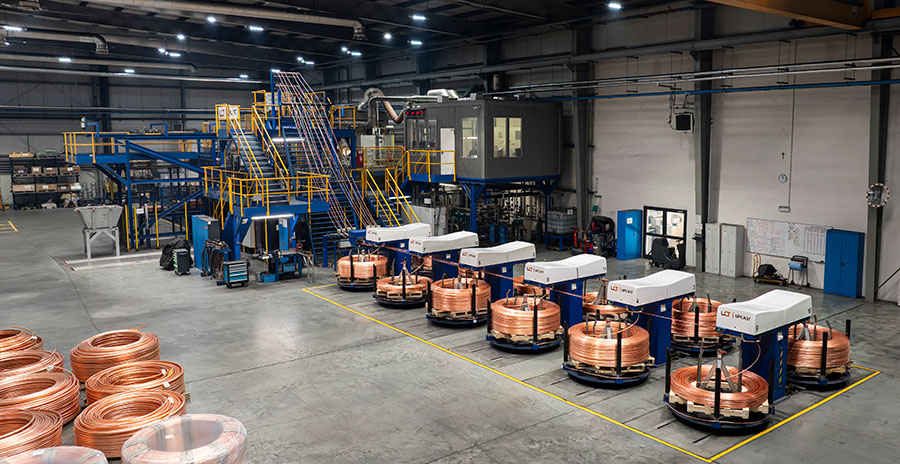
Oxygen-free copper can be drawn into fine diameters without intermediate annealing, helping reduce production costs and time. Any surface waviness visible in early drawing stages naturally smooths out with further reduction.
For butt welding, cold pressure welding yields the best results with oxygen-free copper. When using resistance butt welding, applying maximum pressure and minimal current helps prevent grain coarsening and brittleness.
In rolling operations, oxygen-free copper performs exceptionally well in its as-cast form for shape rolling. However, flat rolling requires some prior hardening to avoid edge cracking or orange-skin surface effects.
In continuous extrusion (Conform) processing, oxygen-free copper stands out for its stability and tool-friendly behavior. The absence of Cu₂O inclusions reduces die wear, prevents gas porosity, and ensures stable plastic flow, leading to longer tool life and higher production consistency.
Environmental considerations
The environmental impact of copper rod production is increasingly under scrutiny as industries transition toward sustainable manufacturing and carbon-neutral supply chains. The primary difference between ETP and oxygen-free copper extends beyond performance figures—it also lies in energy source and process efficiency.
ETP copper rod is typically produced using fossil fuels, most commonly natural gas, to provide the thermal energy needed for melting and refining. This results in a direct carbon footprint, as combustion releases CO₂ and other greenhouse gases. While modern ETP production lines have improved energy efficiency through heat recovery and optimized furnaces, their dependence on fossil fuels remains a limiting factor in sustainability terms.
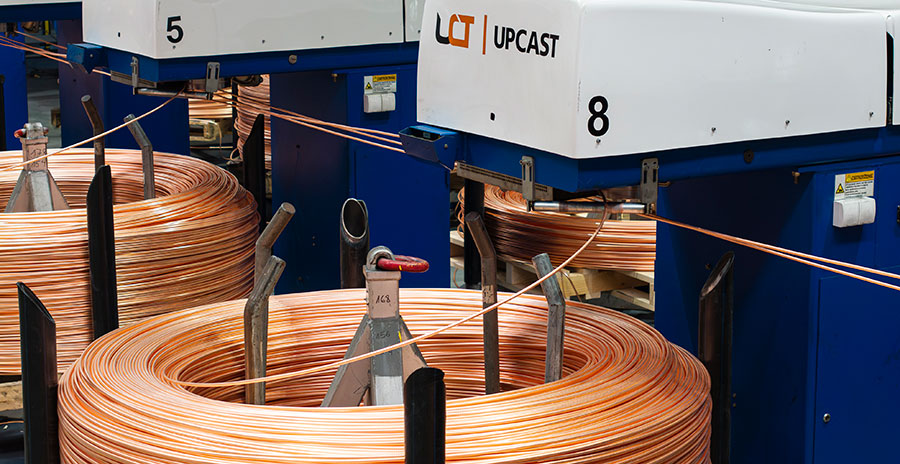
In contrast, oxygen-free copper rod can be produced using only electric power. This process requires no combustion-based heat source and can operate entirely on renewable electricity — for example wind, water or solar energy. This feature provides a clear pathway toward carbon-neutral copper production, particularly in regions where renewable energy is readily available.
In summary, while both copper types are fully recyclable and retain their intrinsic metal value indefinitely, oxygen-free copper offers a more sustainable production profile. Its compatibility with renewable energy, reduced process emissions, and higher operational efficiency make it the preferred choice for low-carbon manufacturing environments aligned with future environmental regulations and global decarbonization goals.
Conclusion
While ETP copper rod continues to serve as a reliable and economical material for general-purpose electrical applications, oxygen-free copper rod clearly leads in performance-critical environments. Its combination of maximum electrical conductivity, enhanced ductility, superior surface cleanliness, and unmatched solderability and weldability makes it indispensable for advanced manufacturing.
Applications such as high-speed multiwire drawing, continuous extrusion, precision conductor fabrication, and magnet wire production all benefit from the purity and stability of OFE/OFHC copper. With only modest adjustments in processing, manufacturers can fully leverage its advantages to achieve higher performance, greater efficiency, and long-term product reliability.

Juan Carlos Bodington
Technical Advisor
UPCAST OY
TEXT: Juan Carlos Bodington